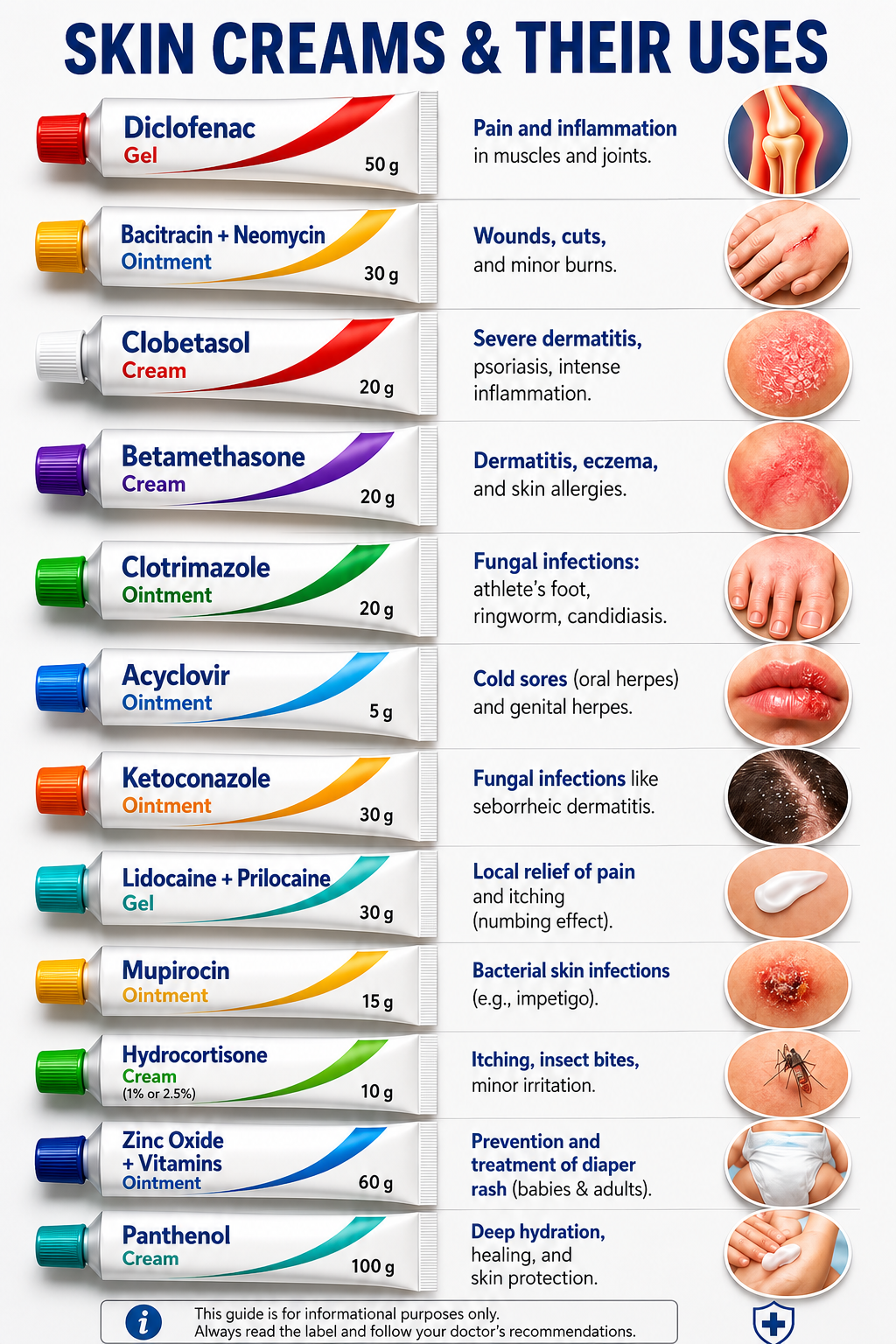
Walk into any pharmacy, and you’ll find shelves filled with creams, gels, and ointments that promise relief for everything from itchy skin to fungal infections. But knowing which product is meant for which condition can be confusing.
Using the wrong cream may not only fail to solve the problem—it can sometimes make it worse. This beginner-friendly guide explains some of the most commonly used skin creams, what they’re typically used for, and when you should see a healthcare professional.
Important: This article is for educational purposes only and should not replace medical advice. Always use medications as directed by your healthcare provider or according to the product label.
1. Diclofenac Gel
What It Is
Diclofenac gel is a nonsteroidal anti-inflammatory drug (NSAID) applied directly to the skin.
Common Uses
- Muscle pain
- Joint pain
- Arthritis pain
- Minor sprains and strains
Keep in Mind
Avoid applying it to broken skin, open wounds, or infected areas. Wash your hands after use unless you’re treating your hands.
2. Bacitracin + Neomycin Ointment
What It Is
This topical antibiotic ointment helps prevent or treat certain minor bacterial skin infections.
Common Uses
- Minor cuts
- Small scrapes
- Minor burns
Keep in Mind
It’s intended for minor wounds only. Deep cuts, animal bites, or serious burns should be evaluated by a healthcare professional.
3. Clobetasol Cream
What It Is
Clobetasol is a very strong prescription corticosteroid used for severe inflammatory skin conditions.
Common Uses
- Severe eczema
- Psoriasis
- Certain forms of dermatitis
Keep in Mind
Clobetasol should only be used under medical supervision. Long-term or incorrect use can thin the skin and increase the risk of side effects.
4. Betamethasone Cream
What It Is
Betamethasone is another prescription corticosteroid that reduces inflammation, redness, and itching.
Common Uses
- Eczema
- Dermatitis
- Allergic skin reactions
Keep in Mind
Do not use steroid creams on fungal or viral infections unless specifically instructed by your healthcare provider.
5. Clotrimazole Ointment or Cream
What It Is
Clotrimazole is an antifungal medication.
Common Uses
- Athlete’s foot
- Ringworm
- Jock itch
- Certain yeast skin infections
Keep in Mind
Treatment often needs to continue for several weeks—even if symptoms improve early—to help prevent the infection from returning.
6. Acyclovir Ointment
What It Is
Acyclovir is an antiviral medication.
Common Uses
- Cold sores (oral herpes)
- Certain herpes simplex virus skin infections
Keep in Mind
It works best when started as soon as symptoms begin, such as tingling or burning before a cold sore appears.
7. Ketoconazole Cream
What It Is
Ketoconazole is another antifungal medication.
Common Uses
- Seborrheic dermatitis
- Ringworm
- Athlete’s foot
- Yeast infections affecting the skin
Keep in Mind
Continue treatment for the full recommended course, even if symptoms improve before the medication is finished.
8. Lidocaine + Prilocaine Cream
What It Is
This combination cream temporarily numbs the skin.
Common Uses
- Before injections
- Minor medical procedures
- Certain painful skin conditions (as directed by a healthcare provider)
Keep in Mind
Use only as directed. Applying too much or covering large areas of skin can increase the risk of side effects.
9. Mupirocin Ointment
What It Is
Mupirocin is a prescription antibiotic used to treat certain bacterial skin infections.
Common Uses
- Impetigo
- Small infected cuts
- Minor bacterial skin infections
Keep in Mind
Mupirocin treats bacterial infections only—it won’t work for fungal or viral infections.
10. Hydrocortisone Cream
What It Is
Hydrocortisone is a mild corticosteroid that’s available in lower strengths over the counter.
Common Uses
- Itching
- Mild eczema
- Insect bites
- Minor skin irritation
- Allergic rashes
Keep in Mind
Avoid prolonged use without medical advice, especially on the face or around the eyes.
11. Zinc Oxide Cream
What It Is
Zinc oxide forms a protective barrier on the skin.
Common Uses
- Diaper rash
- Minor skin irritation
- Protecting sensitive skin from moisture
Keep in Mind
It’s safe for many people when used as directed and is commonly found in diaper rash creams and some sunscreens.
12. Panthenol Cream
What It Is
Panthenol (Provitamin B5) helps moisturize and support the skin’s natural barrier.
Common Uses
- Dry skin
- Minor skin irritation
- Healing after minor skin damage
- Moisturizing sensitive skin
Keep in Mind
Panthenol is often included in skincare products designed to soothe and hydrate the skin.
How to Choose the Right Skin Cream
Before using any cream, ask yourself:
- Is the problem caused by bacteria, fungus, inflammation, or an injury?
- Is the medication over the counter or prescription?
- Does the product match your symptoms?
- Have you read the directions and warnings?
If you’re unsure about the cause of a rash or skin problem, it’s best to consult a healthcare professional instead of guessing.
Safety Tips
- Always wash your hands before and after applying topical medications.
- Follow the recommended dosage and treatment duration.
- Don’t share prescription creams with others.
- Avoid using expired medications.
- Stop using the product and seek medical advice if you develop severe irritation, swelling, or an allergic reaction.
- Keep creams out of reach of children.
When to See a Doctor
Seek medical care if:
- A rash spreads quickly.
- You develop fever along with a skin infection.
- A wound becomes increasingly painful, swollen, or produces pus.
- Symptoms don’t improve after several days of appropriate treatment.
- You’re unsure whether the condition is bacterial, fungal, viral, or inflammatory.
Final Thoughts
Skin creams can be very effective when used correctly, but the right treatment depends on the underlying cause of your skin condition. Antibiotics help treat bacterial infections, antifungal creams target fungal infections, corticosteroids reduce inflammation, and moisturizing creams protect and repair the skin barrier. Understanding what each product is designed for can help you make informed decisions, but persistent or severe skin problems should always be evaluated by a healthcare professional for an accurate diagnosis and appropriate treatment.
