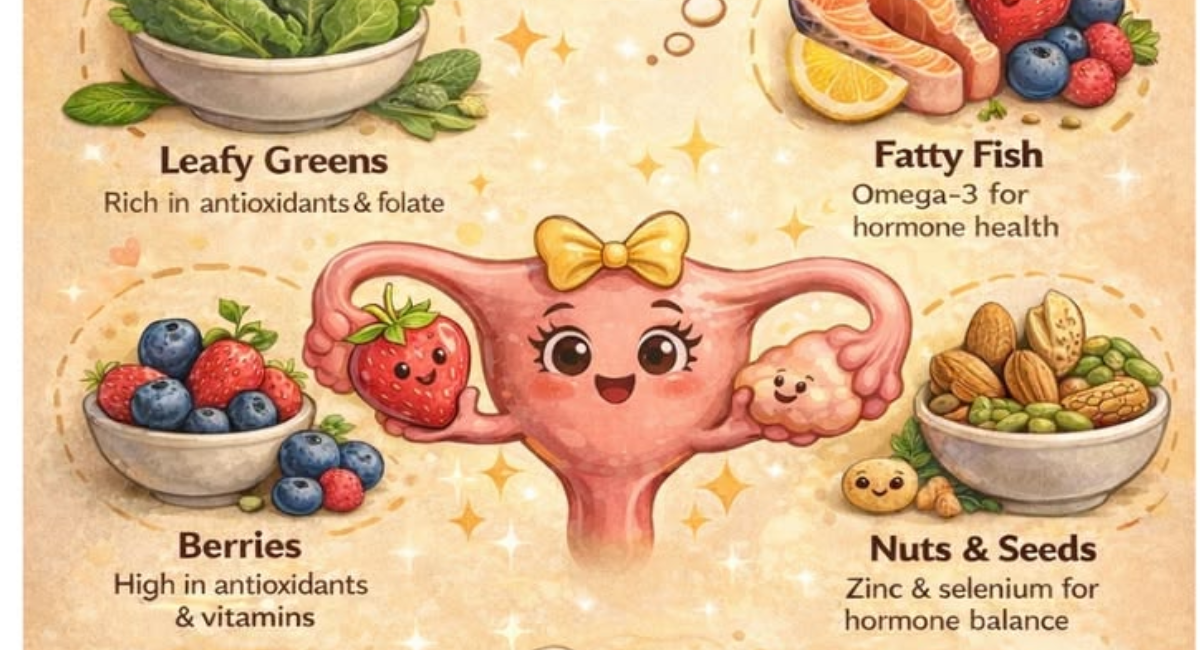
Your ovaries play a vital role in reproductive health by producing eggs and hormones such as estrogen and progesterone. While no single food can prevent ovarian conditions or guarantee fertility, eating a balanced, nutrient-rich diet can support overall health, hormone function, and your body’s natural processes.
The best approach is to focus on a variety of whole foods that provide vitamins, minerals, healthy fats, fiber, and antioxidants. Combined with regular exercise, adequate sleep, stress management, and routine medical care, these dietary choices can help support long-term ovarian health.
1. Leafy Green Vegetables
Dark leafy greens are packed with folate, iron, calcium, and antioxidants that support overall health.
Excellent choices include:
- Spinach
- Kale
- Swiss chard
- Collard greens
- Arugula
These vegetables also provide fiber, which supports digestive health and overall wellness.
2. Berries
Blueberries, strawberries, raspberries, and blackberries are rich in antioxidants that help protect cells from oxidative stress.
Benefits include:
- Vitamin C
- Fiber
- Natural plant compounds called polyphenols
- Low in added sugar
Add berries to oatmeal, yogurt, or smoothies for a nutritious boost.
3. Fatty Fish
Salmon, sardines, trout, and mackerel provide omega-3 fatty acids that support heart health and may help regulate normal inflammatory processes.
They also supply:
- Vitamin D
- High-quality protein
- Selenium
Aim for two servings of low-mercury fatty fish each week if recommended for your dietary needs.
4. Avocados
Avocados are rich in heart-healthy monounsaturated fats, fiber, potassium, and vitamin E.
They make an excellent addition to:
- Salads
- Whole-grain toast
- Smoothies
- Grain bowls
5. Eggs
Eggs provide high-quality protein along with nutrients such as choline, vitamin D, and B vitamins.
They are an easy, versatile option for breakfast or lunch.
6. Nuts and Seeds
Almonds, walnuts, pumpkin seeds, sunflower seeds, chia seeds, and flaxseeds contain healthy fats, protein, fiber, and important minerals.
These nutrient-dense snacks support overall health and are easy to add to meals.
7. Whole Grains
Whole grains provide complex carbohydrates, fiber, and B vitamins that help support steady energy levels.
Healthy options include:
- Oats
- Brown rice
- Quinoa
- Barley
- Whole wheat
- Farro
Choose whole grains over refined grains whenever possible.
8. Beans and Lentils
Legumes are rich in:
- Plant protein
- Iron
- Folate
- Fiber
- Magnesium
They are an excellent choice for vegetarian and plant-based eating patterns.
9. Citrus Fruits
Oranges, lemons, grapefruits, and mandarins provide vitamin C, which supports immune health and helps the body absorb iron from plant foods.
Enjoy them fresh rather than as sugary juices whenever possible.
10. Greek Yogurt
Plain Greek yogurt offers:
- Protein
- Calcium
- Probiotics that support digestive health
Choose unsweetened varieties and add fresh fruit for natural sweetness.
11. Colorful Vegetables
Bright vegetables are rich in vitamins, minerals, and antioxidants.
Include:
- Bell peppers
- Carrots
- Sweet potatoes
- Tomatoes
- Broccoli
- Brussels sprouts
Eating a rainbow of vegetables helps ensure a variety of nutrients.
12. Olive Oil
Extra-virgin olive oil is a key part of the Mediterranean diet and provides healthy monounsaturated fats.
Use it for:
- Salad dressings
- Roasted vegetables
- Whole-grain dishes
Nutrients That Support Women’s Health
Certain nutrients are especially important for overall reproductive health:
Folate
Found in leafy greens, beans, lentils, asparagus, and citrus fruits.
Iron
Found in lean meats, spinach, beans, lentils, and fortified cereals.
Vitamin D
Found in fatty fish, fortified dairy products, eggs, and through safe sun exposure.
Omega-3 Fatty Acids
Found in salmon, walnuts, flaxseeds, and chia seeds.
Zinc
Found in seafood, lean meats, legumes, seeds, and nuts.
Foods to Limit
While no foods need to be completely avoided for most people, limiting the following may support overall health:
- Sugar-sweetened beverages
- Highly processed snacks
- Foods high in trans fats
- Excess alcohol
- Excess added sugars
A balanced eating pattern is more important than striving for perfection.
Lifestyle Habits That Support Ovarian Health
Nutrition is just one piece of the puzzle. Other healthy habits include:
- Staying physically active
- Maintaining a healthy weight
- Sleeping 7–9 hours each night
- Managing stress through relaxation techniques
- Staying hydrated
- Scheduling regular healthcare checkups
Can Diet Prevent Ovarian Conditions?
Diet alone cannot prevent or cure ovarian conditions such as ovarian cysts, polycystic ovary syndrome (PCOS), endometriosis, or ovarian cancer. However, a nutritious eating pattern supports overall health and may contribute to better metabolic and hormonal health. If you have symptoms such as persistent pelvic pain, irregular menstrual cycles, bloating, or unusual bleeding, consult a healthcare professional for evaluation and appropriate care.
Final Thoughts
Supporting ovarian health begins with caring for your whole body. A diet rich in colorful fruits and vegetables, whole grains, healthy fats, lean proteins, and fiber provides the nutrients your body needs to function at its best. While no single food is a miracle solution, consistent healthy eating, regular exercise, stress management, and routine medical care can help promote reproductive health and overall well-being for years to come.
