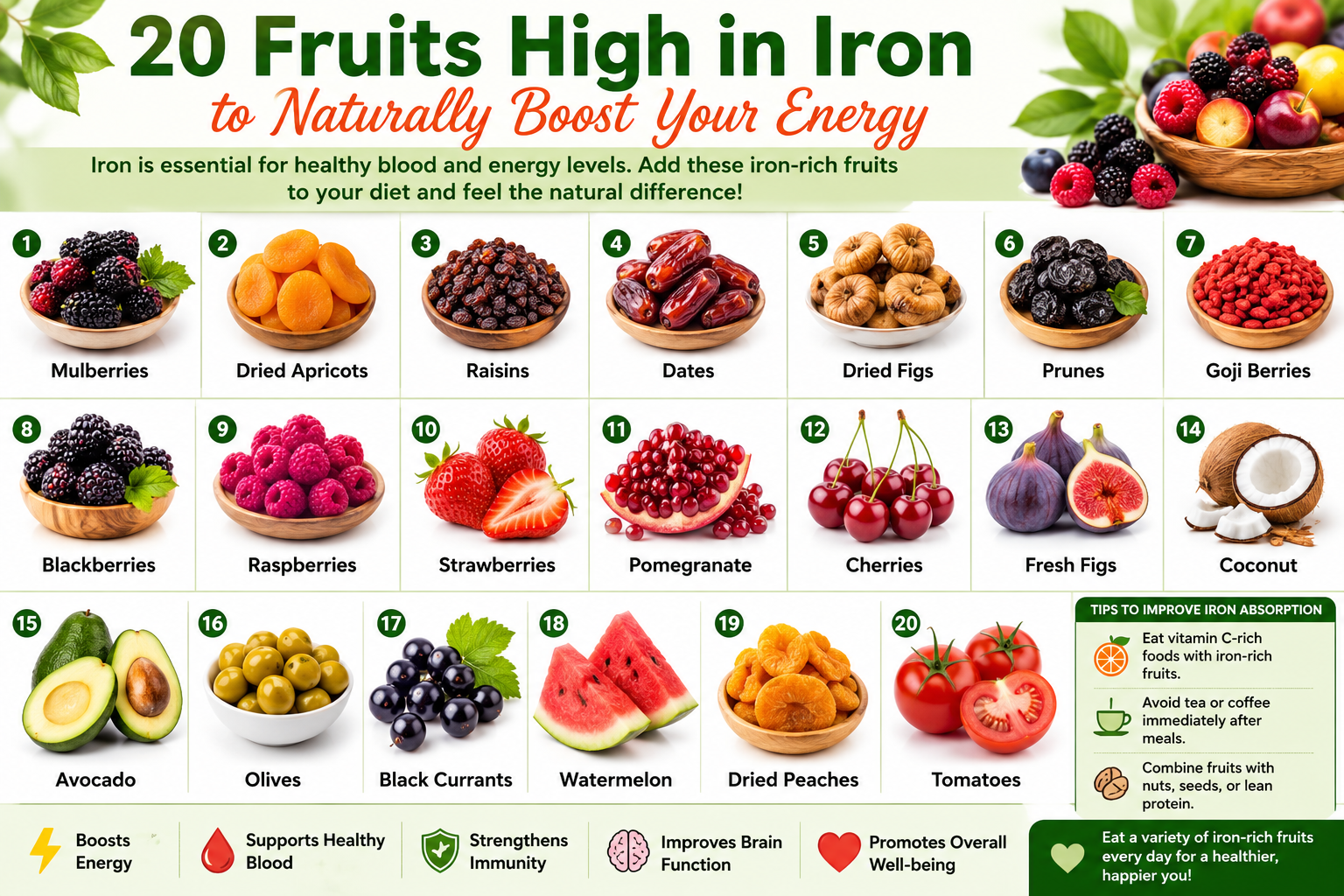
If you’ve been feeling tired, weak, or low on energy, your body could be lacking enough iron. Iron is an important mineral that helps produce healthy red blood cells and carries oxygen throughout your body. While foods like red meat, beans, and spinach are well-known sources of iron, certain fruits can also help increase your daily iron intake.
Many iron-rich fruits are packed with vitamin C, which helps your body absorb iron more efficiently. Adding these fruits to your meals is an easy way to support better health while enjoying naturally sweet and nutritious snacks.
Here are 20 fruits that can help you add more iron to your diet.
1. Mulberries
Mulberries are one of the best fresh fruits for iron. They’re also rich in vitamin C, antioxidants, and fiber, making them a nutritious addition to smoothies, yogurt, or oatmeal.
Why you’ll love them: Naturally sweet, refreshing, and packed with nutrients.
2. Dried Apricots
Dried apricots are one of the richest fruit sources of iron because drying concentrates the nutrients. They’re also high in vitamin A and fiber.
Best way to eat them: Add them to trail mix or enjoy as a healthy afternoon snack.
3. Raisins
Raisins are small but full of nutrients, including iron and potassium. They’re perfect when you need a quick energy boost.
Try them in: Oatmeal, cereal, yogurt, or homemade granola.
4. Dates
Dates provide iron along with natural sugars that supply long-lasting energy. They’re also rich in fiber and magnesium.
Perfect for: Smoothies, desserts, or as a naturally sweet snack.
5. Dried Figs
Dried figs contain iron, calcium, and fiber, making them one of the healthiest dried fruits available.
Serving idea: Pair with nuts for a satisfying snack.
6. Prunes
Prunes aren’t just great for digestion—they also provide a small amount of iron and antioxidants that support overall health.
Enjoy them: On their own or chopped into oatmeal.
7. Goji Berries
Goji berries are considered a superfood because they’re loaded with vitamins, antioxidants, and more iron than many other fruits.
Great for: Smoothie bowls, cereals, and homemade energy bars.
8. Blackberries
Blackberries contain iron, vitamin C, and plenty of fiber. Vitamin C helps your body absorb iron more efficiently.
Best enjoyed: Fresh, frozen, or blended into smoothies.
9. Raspberries
These colorful berries offer small amounts of iron while providing antioxidants that support your immune system.
Easy addition: Sprinkle them over yogurt or breakfast cereal.
10. Strawberries
Strawberries aren’t extremely high in iron, but they’re packed with vitamin C, making them excellent partners for iron-rich meals.
Pro tip: Pair strawberries with iron-rich cereals or spinach salads.
11. Pomegranate
Pomegranate is known for supporting healthy blood circulation and contains iron along with powerful antioxidants.
Enjoy it: Fresh, in salads, or as 100% pomegranate juice.
12. Cherries
Cherries provide a modest amount of iron while offering antioxidants that may help reduce inflammation.
Perfect for: Healthy snacks and fruit salads.
13. Fresh Figs
Fresh figs are naturally sweet and provide iron, potassium, and fiber.
Try them with: Greek yogurt or cottage cheese.
14. Coconut
Fresh coconut contains iron along with healthy fats that provide lasting energy.
Use it in: Smoothies, desserts, or homemade snacks.
15. Avocado
Although many people think of avocado as a vegetable, it’s actually a fruit. It provides iron, healthy fats, and folate.
Best enjoyed: On toast, in salads, or mashed into guacamole.
16. Olives
Olives contain small amounts of iron and healthy fats that support heart health.
Great for: Salads, sandwiches, and Mediterranean-inspired meals.
17. Black Currants
Black currants are rich in both iron and vitamin C, making them an excellent fruit for supporting healthy iron absorption.
Enjoy them: Fresh or in smoothies.
18. Watermelon
Watermelon contains a small amount of iron while keeping you hydrated, especially during warmer months.
Perfect snack: Chilled watermelon slices on a hot day.
19. Dried Peaches
Drying peaches concentrates their nutrients, making dried peaches a tasty source of iron and fiber.
Enjoy as: A convenient on-the-go snack.
20. Tomatoes
Tomatoes are technically fruits and contain small amounts of iron. They’re also an excellent source of vitamin C, which helps improve iron absorption from other foods.
Add them to: Salads, sandwiches, pasta dishes, and soups.
How to Get the Most Iron from Fruits
To maximize the benefits of these fruits, pair them with other iron-rich foods. Some easy combinations include:
- Add raisins or dried apricots to oatmeal.
- Blend strawberries and spinach into a smoothie.
- Top salads with blackberries and sliced avocado.
- Enjoy dates with almonds for a nutritious snack.
- Pair pomegranate seeds with grilled chicken or quinoa bowls.
Combining fruits with iron-rich foods helps your body absorb more iron naturally.
Can Fruits Alone Prevent Iron Deficiency?
While these fruits contribute to your daily iron intake, they shouldn’t be your only source of iron. For healthy iron levels, include a variety of foods such as lean meats, seafood, beans, lentils, tofu, spinach, fortified cereals, and nuts.
If you’ve been diagnosed with iron deficiency or anemia, talk to your healthcare provider before relying on diet alone. They may recommend iron supplements or additional treatment based on your needs.
Final Thoughts
Adding iron-rich fruits to your daily meals is an easy and delicious way to support your overall health. Dried fruits like apricots, dates, raisins, and figs offer some of the highest amounts of iron, while berries, pomegranates, tomatoes, and strawberries provide vitamin C to help your body absorb iron more effectively. By enjoying a variety of these fruits alongside other iron-rich foods, you can naturally support healthy energy levels, improve your nutrition, and maintain a well-balanced diet.
