Have you ever stood in the vitamin aisle wondering which vitamins your body actually needs? You’re not alone. With so many supplements and nutrition trends, it’s easy to feel overwhelmed.
The good news is that most vitamins can be obtained through a balanced diet filled with fruits, vegetables, whole grains, lean proteins, dairy, nuts, and seeds. Understanding what each vitamin does makes it easier to choose the right foods and support your overall health naturally.
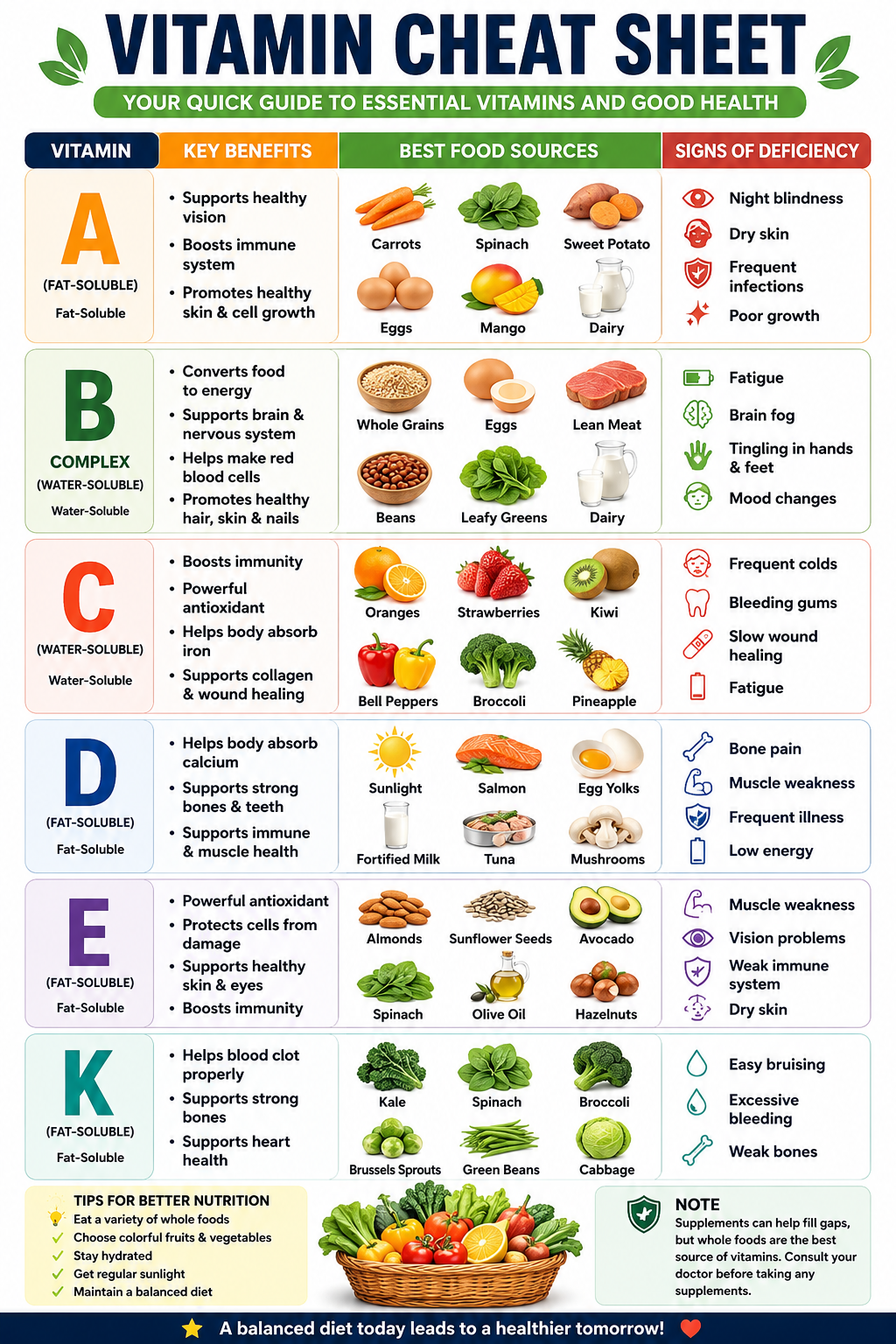
This easy-to-read vitamin cheat sheet breaks down the essential vitamins, their benefits, food sources, and signs of deficiency.
Vitamin A – For Healthy Eyes and Skin
Why Your Body Needs It
Vitamin A supports healthy vision, strengthens your immune system, promotes healthy skin, and helps organs function properly.
Best Food Sources
- Carrots
- Sweet potatoes
- Spinach
- Kale
- Mangoes
- Cantaloupe
- Eggs
- Liver
- Dairy products
Signs You May Need More
- Dry eyes
- Poor night vision
- Dry skin
- Frequent infections
Vitamin B Complex – Your Body’s Energy Team
The B vitamins work together to convert food into energy while supporting your brain, nervous system, and red blood cells.
Includes
- B1 (Thiamine)
- B2 (Riboflavin)
- B3 (Niacin)
- B5 (Pantothenic Acid)
- B6
- B7 (Biotin)
- B9 (Folate)
- B12
Best Food Sources
- Whole grains
- Eggs
- Lean meat
- Chicken
- Fish
- Dairy
- Beans
- Lentils
- Leafy greens
- Bananas
- Avocados
Benefits
- Boosts energy
- Supports brain health
- Helps produce red blood cells
- Supports healthy metabolism
- Promotes healthy hair and skin
Signs of Deficiency
- Fatigue
- Weakness
- Brain fog
- Tingling in hands and feet
- Mood changes
Vitamin C – The Immunity Booster
Why Your Body Needs It
Vitamin C helps strengthen the immune system, promotes collagen production, speeds wound healing, and improves iron absorption.
Best Food Sources
- Oranges
- Strawberries
- Kiwi
- Pineapple
- Bell peppers
- Broccoli
- Tomatoes
- Brussels sprouts
Signs You May Need More
- Frequent colds
- Slow healing wounds
- Bleeding gums
- Easy bruising
- Fatigue
Vitamin D – The Sunshine Vitamin
Why Your Body Needs It
Vitamin D helps your body absorb calcium, keeping bones and teeth strong while supporting immune and muscle health.
Best Food Sources
- Sunlight
- Salmon
- Tuna
- Sardines
- Egg yolks
- Fortified milk
- Fortified cereals
- Mushrooms exposed to UV light
Signs You May Need More
- Bone pain
- Muscle weakness
- Frequent illness
- Low energy
Vitamin E – The Skin Protector
Why Your Body Needs It
Vitamin E is a powerful antioxidant that protects cells from damage while supporting healthy skin, eyes, and the immune system.
Best Food Sources
- Almonds
- Sunflower seeds
- Peanuts
- Spinach
- Avocados
- Olive oil
- Hazelnuts
Signs You May Need More
- Muscle weakness
- Vision problems
- Poor coordination
Vitamin K – The Bone Builder
Why Your Body Needs It
Vitamin K helps blood clot properly and supports strong, healthy bones.
Best Food Sources
- Kale
- Spinach
- Broccoli
- Brussels sprouts
- Cabbage
- Green beans
- Soybeans
Signs You May Need More
- Easy bruising
- Excessive bleeding
- Weak bones
Quick Vitamin Cheat Sheet
| Vitamin | Main Benefit | Best Food Sources |
|---|---|---|
| Vitamin A | Healthy eyes and skin | Carrots, spinach, sweet potatoes |
| Vitamin B Complex | Energy and brain health | Eggs, meat, beans, whole grains |
| Vitamin C | Immunity and collagen | Oranges, kiwi, strawberries |
| Vitamin D | Strong bones | Sunlight, salmon, fortified milk |
| Vitamin E | Healthy skin | Almonds, sunflower seeds, avocado |
| Vitamin K | Blood clotting and bones | Kale, broccoli, spinach |
Tips to Get More Vitamins Naturally
Instead of depending only on supplements, try these healthy habits:
- Fill half your plate with colorful fruits and vegetables.
- Eat a variety of whole foods every day.
- Include healthy fats like nuts, seeds, and avocados.
- Choose whole grains instead of refined grains.
- Eat lean protein with every meal.
- Spend a little time outdoors for natural vitamin D.
- Drink plenty of water throughout the day.
A colorful plate usually means you’re getting a wider range of vitamins and nutrients.
Do You Need Vitamin Supplements?
Many healthy adults can meet their vitamin needs through a balanced diet. However, some people—including pregnant women, older adults, vegans, or individuals with certain medical conditions—may need supplements.
Before starting any vitamin supplement, talk to your healthcare provider or a registered dietitian. Taking more than the recommended amount of certain vitamins can be harmful.
Final Thoughts
Think of vitamins as your body’s daily support system. Each one has a unique job, from boosting your immune system and increasing energy to protecting your bones, skin, and heart. Rather than focusing on one “super vitamin,” aim to eat a wide variety of nutrient-rich foods every day.
Use this vitamin cheat sheet as a quick reference when planning meals or grocery shopping. Small, healthy choices made consistently can go a long way toward helping you feel your best, stay energized, and support your overall health for years to come.
