Magnesium is one of the most important minerals your body needs to stay healthy. It supports over 300 biochemical processes, including muscle and nerve function, energy production, heart health, and bone strength. Unfortunately, many people don’t get enough magnesium through their daily diet.
The good news is that many delicious and nutritious foods are naturally rich in magnesium. By adding these foods to your meals, you can help improve your overall health while supporting your body’s essential functions.
Why Is Magnesium Important?
Magnesium plays a vital role in maintaining good health. It helps:
- Support healthy muscles and prevent cramps
- Improve nerve function
- Maintain a regular heartbeat
- Strengthen bones and teeth
- Regulate blood sugar levels
- Support healthy blood pressure
- Boost energy production
- Improve sleep quality
- Reduce stress and promote relaxation
Top Foods High in Magnesium
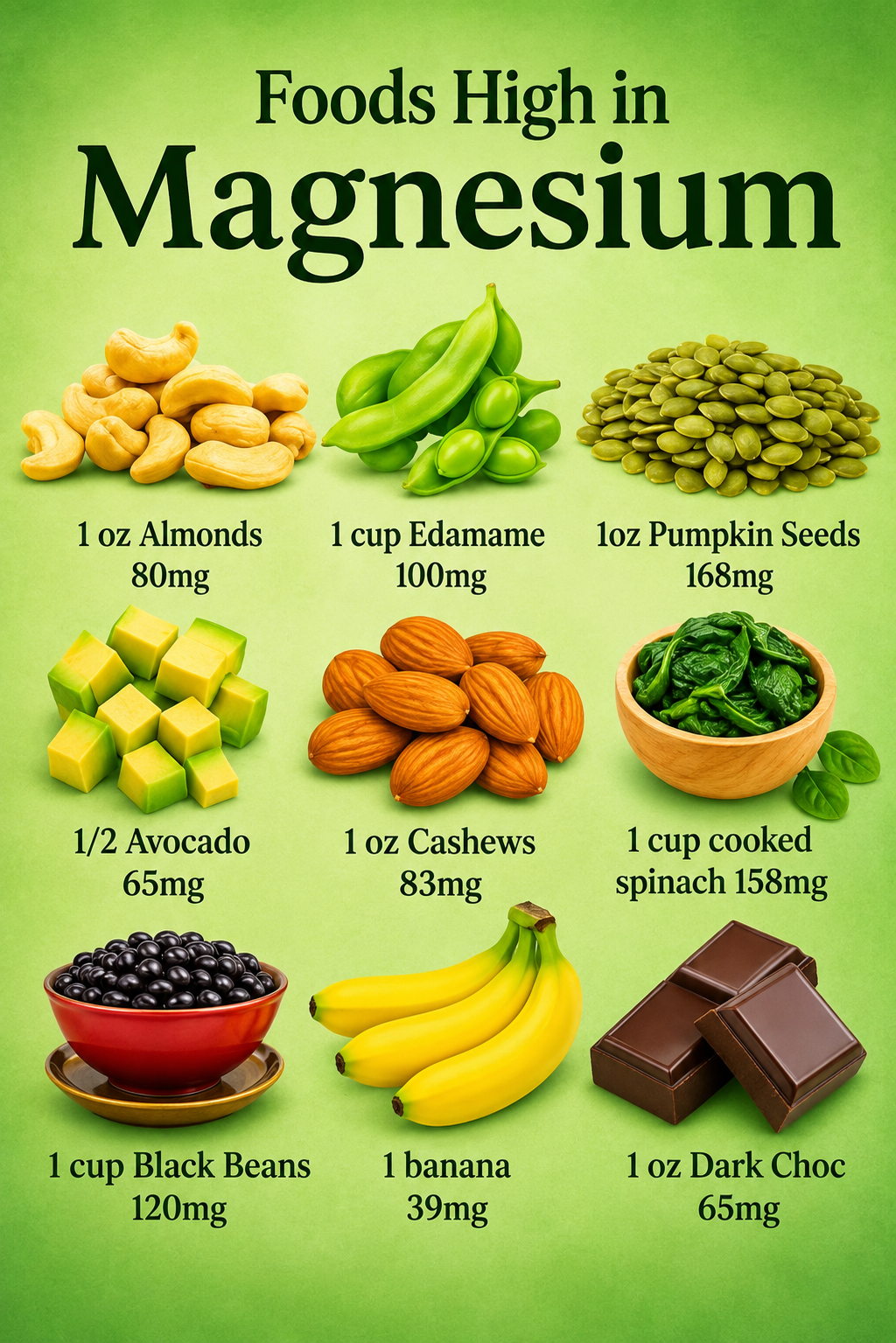
1. Pumpkin Seeds – 168 mg per ounce
Pumpkin seeds are among the richest natural sources of magnesium. They’re also packed with zinc, healthy fats, protein, and antioxidants.
Best ways to eat:
- Sprinkle over salads
- Add to oatmeal
- Blend into smoothies
- Eat as a healthy snack
2. Cooked Spinach – 158 mg per cup
Spinach is a nutrient powerhouse loaded with magnesium, iron, vitamin A, vitamin C, and fiber.
Benefits:
- Supports bone health
- Boosts immunity
- Promotes healthy digestion
Enjoy it in:
- Soups
- Smoothies
- Salads
- Stir-fries
3. Black Beans – 120 mg per cup
Black beans provide magnesium along with protein, fiber, potassium, and antioxidants.
Health benefits:
- Supports heart health
- Helps regulate blood sugar
- Keeps you full longer
4. Edamame – 100 mg per cup
Edamame, or young soybeans, are an excellent plant-based source of magnesium and protein.
Why include them?
- Great for vegetarians and vegans
- Rich in fiber
- Supports muscle recovery
5. Cashews – 83 mg per ounce
Cashews contain healthy fats, magnesium, copper, and protein.
Perfect for:
- Snacking
- Trail mixes
- Homemade energy bars
- Stir-fries
6. Almonds – 80 mg per ounce
Almonds are one of the healthiest nuts you can eat. Besides magnesium, they’re rich in vitamin E, healthy fats, and antioxidants.
Health benefits:
- Improves heart health
- Supports brain function
- Helps maintain healthy cholesterol levels
7. Avocado – 65 mg per half fruit
Avocados provide magnesium along with potassium, fiber, and heart-healthy monounsaturated fats.
Ways to enjoy:
- Toast
- Salads
- Smoothies
- Guacamole
8. Dark Chocolate – 65 mg per ounce
Dark chocolate (70% cocoa or higher) is a delicious source of magnesium.
Additional benefits:
- Rich in antioxidants
- May improve heart health
- Can help boost mood
Enjoy in moderation because it can also contain added sugar and calories.
9. Banana – 39 mg each
Bananas are widely known for potassium, but they also provide magnesium that supports muscle and nerve function.
They’re perfect:
- Before workouts
- In smoothies
- With oatmeal
- As a quick snack
Signs You May Need More Magnesium
A magnesium deficiency can sometimes cause symptoms such as:
- Muscle cramps or spasms
- Fatigue
- Weakness
- Poor sleep
- Frequent headaches
- Irritability
- Tingling sensations
- Irregular heartbeat (in more serious cases)
These symptoms can have many possible causes, so it’s important to consult a healthcare professional rather than self-diagnose.
How Much Magnesium Do Adults Need?
The recommended daily intake varies by age and sex, but general guidelines are:
- Men: 400–420 mg per day
- Women: 310–320 mg per day
- Pregnant women: 350–360 mg per day
Most people can meet these needs through a balanced diet rich in whole foods.
Tips to Increase Your Magnesium Intake
- Include leafy greens with lunch or dinner.
- Snack on almonds or cashews instead of processed foods.
- Add pumpkin seeds to yogurt, salads, or oatmeal.
- Eat beans several times a week.
- Enjoy avocado in sandwiches and salads.
- Choose dark chocolate with at least 70% cocoa as an occasional treat.
- Include magnesium-rich foods in smoothies.
Final Thoughts
Magnesium is essential for your body’s overall health, from supporting muscles and nerves to promoting heart health and better sleep. Fortunately, increasing your magnesium intake doesn’t require expensive supplements. Simple foods like pumpkin seeds, spinach, black beans, edamame, almonds, cashews, avocado, bananas, and dark chocolate can help you meet your daily needs while providing many other important nutrients.
