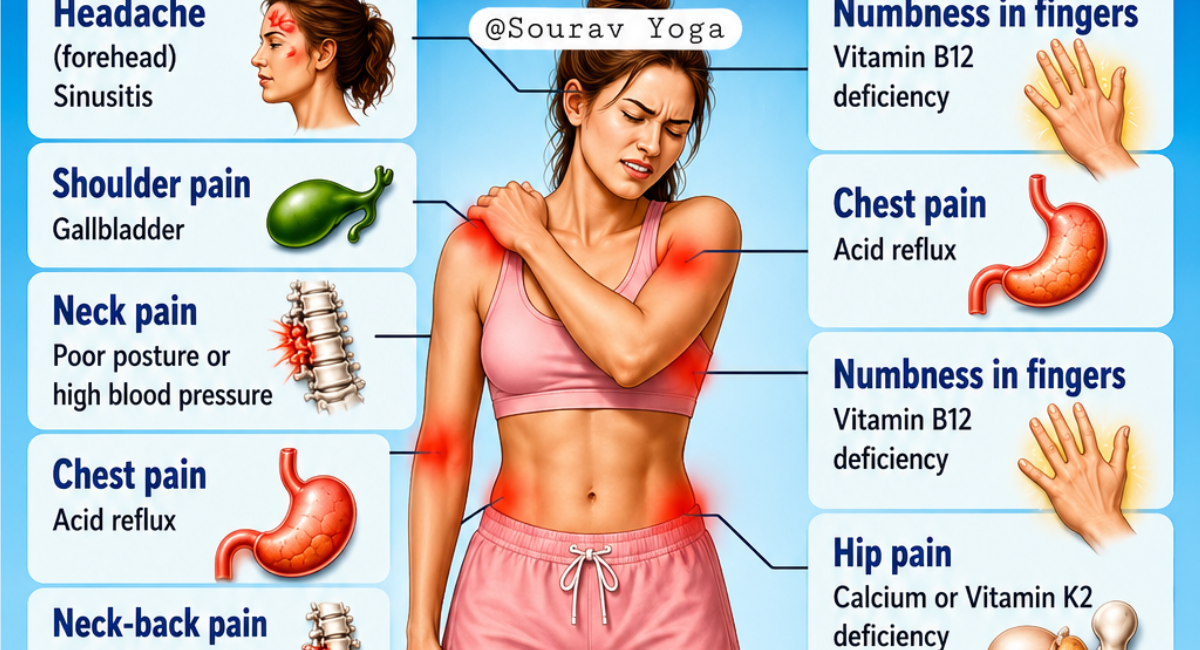
Pain is your body’s way of telling you that something needs attention. Sometimes it’s caused by a minor injury or muscle strain, while other times it may be related to a vitamin deficiency or an underlying medical condition. Although social media graphics often suggest that one specific type of pain always points to one particular health problem, the reality is much more complex.
The same symptom can have many different causes, which is why it’s important not to rely on online charts for diagnosis. Instead, use them as a starting point to understand possible explanations and know when to seek medical advice.
Headaches
Headaches are one of the most common health complaints. They can be caused by:
- Tension and stress
- Migraines
- Sinus infections
- Dehydration
- Lack of sleep
- Eye strain
- High blood pressure in some cases
Some people with low magnesium levels may experience migraines, but not every headache is caused by magnesium deficiency.
Shoulder Pain
Shoulder pain often results from:
- Muscle strain
- Rotator cuff injuries
- Frozen shoulder
- Arthritis
- Poor posture
Occasionally, pain felt in the right shoulder may be referred from gallbladder disease, especially when accompanied by abdominal pain, nausea, or pain after eating fatty meals.
Neck Pain
Neck pain is commonly linked to:
- Poor posture
- Long hours at a computer
- Muscle tension
- Arthritis
- Whiplash injuries
Although high blood pressure is usually called the “silent killer” because it often causes no symptoms, severe elevations in blood pressure can sometimes contribute to headaches or neck discomfort. Neck pain alone should not be considered a reliable sign of high blood pressure.
Chest Pain
Chest pain should never be ignored.
Possible causes include:
- Acid reflux (GERD)
- Muscle strain
- Anxiety or panic attacks
- Lung conditions
- Heart disease
Because chest pain can be a symptom of a heart attack, seek emergency medical care immediately if it is severe or accompanied by shortness of breath, sweating, dizziness, nausea, or pain spreading to the jaw, shoulder, or arm.
Lower Back Pain
Lower back pain is extremely common and may be caused by:
- Muscle strain
- Poor posture
- Herniated discs
- Arthritis
- Sciatica
Kidney problems can sometimes cause pain in the side or back, but lower back pain is much more often related to the muscles and spine than the kidneys.
Mid-Back Pain
Pain in the middle of the back may result from:
- Muscle tension
- Poor posture
- Spinal conditions
Less commonly, pain in this area may be referred from internal organs, including the pancreas or gallbladder, particularly if it occurs with abdominal pain, nausea, or vomiting.
Knee Pain
Knee pain can occur because of:
- Arthritis
- Sports injuries
- Tendon problems
- Cartilage damage
- Excess body weight
Vitamin D deficiency may contribute to bone or muscle discomfort in some people, but it is rarely the sole cause of knee pain.
Elbow Pain
Pain around the elbow is often caused by:
- Tennis elbow
- Golfer’s elbow
- Tendon inflammation
- Repetitive movements
Rest, stretching, and physical therapy often help mild cases recover.
Numbness or Tingling in the Fingers
Numbness may be linked to:
- Vitamin B12 deficiency
- Carpal tunnel syndrome
- Diabetes
- Nerve compression
- Neck problems
Persistent numbness should always be evaluated by a healthcare professional.
Hip Pain
Hip pain may develop because of:
- Arthritis
- Muscle injuries
- Bursitis
- Hip joint disorders
Although nutrition supports bone health, hip pain is not usually caused solely by calcium or vitamin K deficiency.
Leg Cramps
Occasional leg cramps are common.
Possible causes include:
- Dehydration
- Muscle fatigue
- Pregnancy
- Electrolyte imbalances
- Certain medications
Magnesium deficiency may contribute in some cases, but it is not the only possible explanation.
Joint Stiffness
Stiff joints may result from:
- Osteoarthritis
- Rheumatoid arthritis
- Inactivity
- Aging
- Previous injuries
Omega-3 fatty acids may help support joint health and reduce inflammation in some people, but joint stiffness can have many different causes.
Ankle and Foot Pain
Pain in the ankles or feet may be caused by:
- Sprains
- Plantar fasciitis
- Tendon injuries
- Flat feet
- Overuse
- Arthritis
Electrolyte imbalances may contribute to muscle cramps, but persistent ankle pain should be medically evaluated.
Could Vitamin Deficiencies Be the Cause?
Certain nutrient deficiencies can contribute to symptoms, including:
Vitamin B12
- Numbness or tingling
- Fatigue
- Weakness
Vitamin D
- Bone discomfort
- Muscle weakness
Magnesium
- Muscle cramps
- Muscle twitches
- Fatigue
Iron
- Fatigue
- Shortness of breath
- Weakness
A blood test is the best way to determine whether you have a vitamin deficiency.
When Should You See a Doctor?
Schedule a medical evaluation if your pain:
- Lasts longer than a few weeks
- Becomes progressively worse
- Limits daily activities
- Is associated with numbness or weakness
- Occurs after a serious injury
- Comes with fever or unexplained weight loss
Seek emergency medical care immediately if you experience:
- Severe chest pain
- Sudden weakness on one side of the body
- Difficulty speaking
- Loss of consciousness
- Severe shortness of breath
Healthy Habits That Support Your Muscles and Joints
Simple daily habits can help reduce the risk of many types of pain:
- Stay physically active.
- Stretch regularly.
- Maintain good posture.
- Drink enough water.
- Eat a balanced diet rich in fruits, vegetables, lean protein, and whole grains.
- Get enough calcium, vitamin D, and other essential nutrients.
- Sleep 7–9 hours each night.
- Maintain a healthy weight.
Final Thoughts
Pain is a signal—not a diagnosis. While charts that link specific body pains to particular diseases or vitamin deficiencies can be interesting, they often oversimplify complex medical conditions. Many symptoms have multiple possible causes, and only a qualified healthcare professional can determine the reason through a proper history, physical examination, and, if needed, laboratory tests or imaging. If pain is persistent, severe, or accompanied by other concerning symptoms, don’t rely on internet graphics alone—seek medical advice for an accurate diagnosis and appropriate treatment.
